The Journal · October 2, 2026
Cookie Kit vs. Cookie Mix vs. Frozen Dough: What Is Actually Different
Three products promise warm cookies without a recipe. They are not the same thing. Here is what each one asks of you, what it leaves out, where the cost goes, and which one fits which night.
By Splash
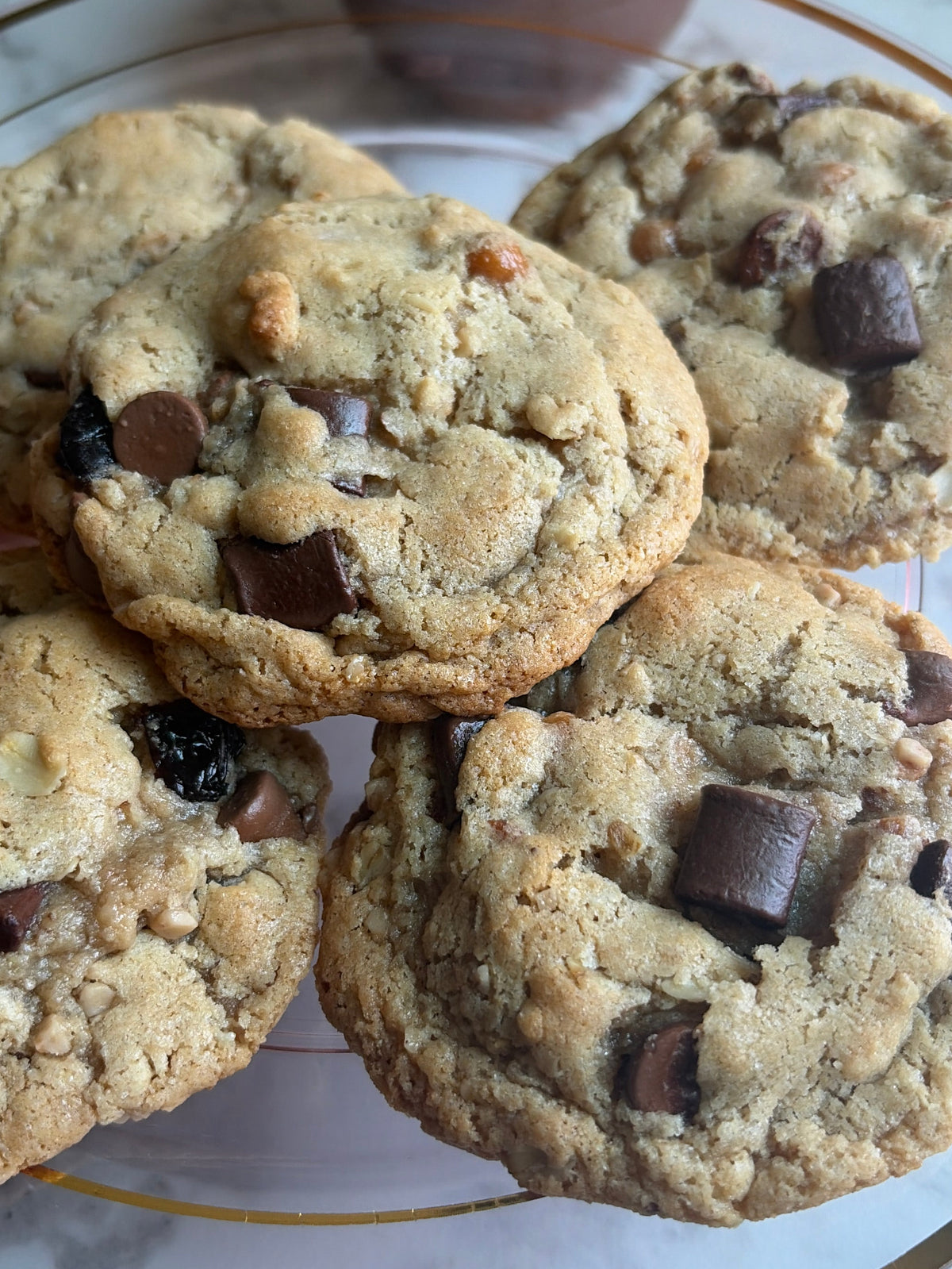
Walk the baking aisle, the freezer aisle and the gift sites and you will find three different products that all promise the same thing: warm homemade cookies with none of the work. A box of mix. A tray of frozen dough. A bake-at-home kit. They get lumped together, and they should not be, because they make different trade-offs on the four things that matter: what you still have to do, how the thing gets to you and lives in your kitchen, what you pay per cookie, and what comes out of the oven. We make one of the three, so read this knowing that. We have tried to be fair to the other two.
What you still have to do
Boxed mix
A mix is the dry half of a recipe: flour, sugar, leavening, salt, maybe chips. You supply the fat, the egg and sometimes water or milk, and you supply the technique. Softening the butter to the right temperature, measuring it, creaming or stirring it in, deciding how big a spoonful is. The box is doing about a third of the work, and it leaves you the third where most cookies go wrong. If you have read our post on why cookies spread, you know that warm butter and inconsistent scooping are two of the biggest causes, and a mix hands you both.
Frozen dough
Frozen pre-portioned dough does the opposite. Someone else made the dough, scooped it and froze it. Your job is a baking sheet and an oven. It is the least work of the three, and the result is as good as the dough that went into the freezer. The trade is that you had nothing to do with it. There is no mixing, no smell of dough, nothing for a kid to do with their hands. You are reheating someone else's cookies, which is sometimes exactly what you want.
A kit
A kit sits between them, and the good ones sit closer to frozen dough on effort while keeping the part people actually enjoy. In The Everything, the dry pouch holds the flour, sugars, leavening and all seven mix-ins, and the wet pouch holds the liquid side at the ratio the dry side needs. You add one scoop of water, mix with your hands for two minutes, scoop six balls and bake. You made the dough. You did not measure anything, soften anything or crack anything.
How it gets to you and where it lives
This is the difference people underrate until a box shows up.
Mix ships like any dry good, sits in a pantry for a year or more, and is the easiest of the three to keep around. Its weakness is that the ingredients you add are the perishable ones, so a box of mix in the cupboard does not mean cookies tonight. It means cookies if you also have butter and an egg.
Frozen dough has to stay frozen from the factory to your oven. Buying it in a store means a cold bag and a quick drive. Buying it online means an insulated box, dry ice and a shipping fee that reflects both. It takes freezer space, and a freezer that loses power or a box that sits on a porch all afternoon is a problem.
A kit like ours ships by regular ground mail, no ice, no insulation, in 3 to 5 business days, and that tells you most of what you need to know about how it keeps. It is built to wait for the night you want it. No freezer, and nothing from the fridge needed when the night comes.
What you pay, and for what
Per cookie, a boxed mix is the cheapest by a wide margin, as long as you do not count the butter, the egg, and the fact that the cheapest mixes use the cheapest chocolate. It is a commodity, priced like one.
Frozen dough from a good bakery is the most expensive per cookie. You are paying for a bakery's recipe and butter, for someone to make and portion it, and for the cold chain to deliver it. Shipping is often a meaningful part of the total.
A kit lands in between, and where it lands depends on what is in the pouch. The Everything is $22 for six cookies, with three-kit and six-kit packs that bring the per-kit price down, flat-rate shipping and free shipping from $50. That buys a buttery dough, two kinds of chocolate, real toffee, caramel, pretzels, oats and dried cherries, all weighed out, plus the gloves and the parchment. Price those seven add-ins at a grocery store and the kit starts to look reasonable, and you do not end up with six open bags in the cupboard.
What comes out of the oven
A mix bakes into whatever the person adding the butter made of it. Follow the box with cold-enough butter and a level scoop and you get a decent, uncomplicated cookie. Most people do not, and get a flat one.
Good frozen dough bakes into a very good cookie, consistently, because the hard decisions were made by a professional and then frozen in place. The ceiling is high. The floor is also high. It just is not your cookie.
A kit's result depends on whether the ratios were fixed by weight before it was sealed. If they were, you get the consistency of frozen dough with the dough actually made in your bowl. That was the whole point of the pouch our mom, Michele, engineered: the flour-to-fat-to-sugar ratio is set at the factory, every dough ball is the same 70 grams, and the only variables left are the ones a kit cannot ship, which are your oven and your pan. The bake page handles those with timers and a check-at-twelve-minutes rule.
Which one, which night
- You bake regularly, you have butter and eggs, and you want cheap cookies for a crowd: a mix, with the butter cold and a scale on the counter.
- You want bakery cookies tonight and you want zero involvement: frozen dough, if you have the freezer space and the shipping was worth it to you.
- You want to make the cookies, with your hands or a kid's, with no shopping, no measuring and no cold chain, and you want them to come out right: a kit.
- You are sending cookies to someone else: frozen dough gives them a chore and a freezer problem; a mix gives them a shopping list. A kit gives them twenty-five minutes and warm cookies, which is the gift.
If you want to see what a kit is like before you commit, the bake page shows every step and the videos from our kitchen, and the FAQ covers what is in the box and what is not.
More from the journal
October 2, 2026
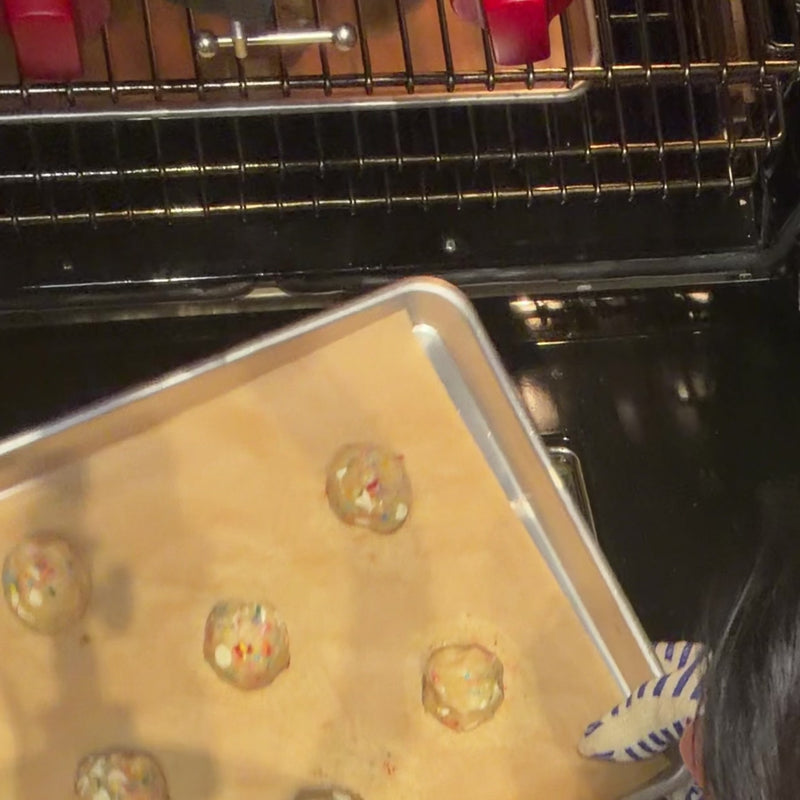
Why Do My Cookies Spread? The Science and the Fixes
Flat, greasy, one-giant-cookie-on-the-sheet cookies come from a short list of causes: warm fat, too little flour, the wrong sugar balance, a cool oven or a hot pan. Here is what is happening in the dough, and how to fix each one.
October 2, 2026
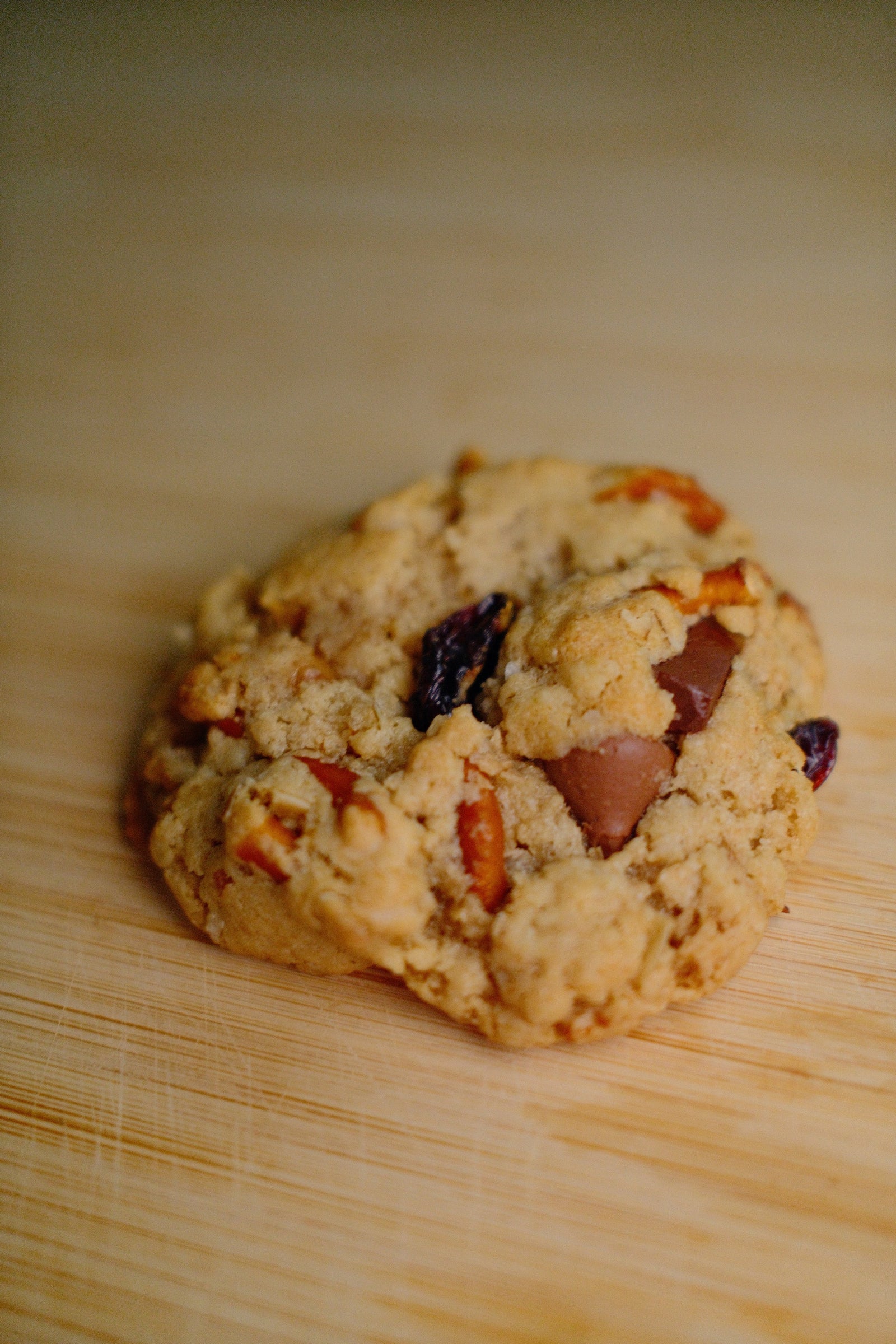
The Everything Cookie: What Each of the Seven Mix-Ins Is Doing
Two chocolates, toffee, caramel, oats, dried cherries and pretzels, in one buttery dough. That is not a kitchen-sink cookie. Each one is there for a reason, and here is what every piece does to the bite.