The Journal · October 2, 2026
Why Do My Cookies Spread? The Science and the Fixes
Flat, greasy, one-giant-cookie-on-the-sheet cookies come from a short list of causes: warm fat, too little flour, the wrong sugar balance, a cool oven or a hot pan. Here is what is happening in the dough, and how to fix each one.
By Splash
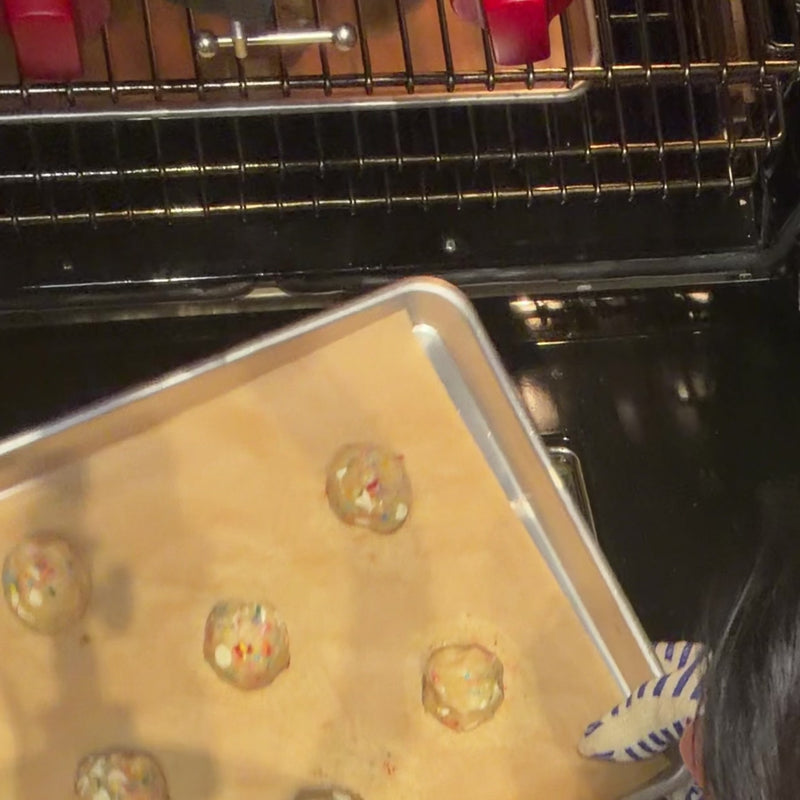
You followed the recipe. The dough looked right. Twelve minutes later the sheet holds one thin, lacy, greasy cookie the size of a dinner plate. Nothing is wrong with you. Spread is the most common cookie failure there is, and it comes from a short list of causes that are all easy to see once you know what the dough is doing in the oven.
What is happening in the first five minutes
A ball of cookie dough is held together by cold fat. In the oven, three things happen in order. First, the butter melts, somewhere around 90 to 95°F, long before anything else changes. The dough slumps outward. Second, the sugar dissolves into the water in the dough and turns it syrupy, which lets it slump further. Third, and only once the dough passes about 140 to 160°F, the egg proteins and the starch in the flour begin to set and the cookie stops moving. Everything in between is spread.
So the question is never "why did it spread" but "why did it spread for so long before it set." Every fix below either keeps the fat solid longer, gives the dough more structure, or gets it to setting temperature faster.
Cause 1: the butter was too warm
"Softened butter" in a recipe means around 65°F: cool to the touch, bends without cracking, holds a fingerprint without your finger sinking in. Butter left out on a summer counter, or softened in the microwave, is closer to 75 or 80°F and already halfway to melted. It cannot hold air when creamed, and it starts spreading the moment the sheet goes in.
The fix: cut cold butter into cubes and give it twenty to thirty minutes on the counter, no more. If the dough feels greasy or shiny after mixing, it is too warm. Chill it.
Cause 2: not enough flour
Flour is the structure. Too little and there is nothing to hold the melted fat and syrup in place. The trouble is that a "cup" of flour is not a fixed amount. Dip the cup into the bag and pack it and you get around 150 grams. Spoon flour into the cup and level it and you get around 120. That is a 20 percent difference in the one ingredient that controls spread, from the same recipe, depending on how you scooped.
The fix: weigh it. A kitchen scale costs less than two bags of good chocolate chips. If you must use cups, fluff the flour, spoon it in, and level with a knife. And if a recipe reliably spreads for you, add two tablespoons of flour and see what happens.
Cause 3: the sugar balance
Sugar is not just sweet. It is a liquid once it dissolves, and more sugar means more syrup and more spread. The type matters too. White sugar dissolves cleanly and spreads more. Brown sugar carries molasses, which holds water, is slightly acidic, and keeps the cookie thicker and chewier. Recipes that are all white sugar tend to go thin and crisp; recipes heavy on brown sugar stay tall and soft.
The fix: swap some of the white sugar for brown if you want a thicker cookie, and never add extra sugar "to taste" in a cookie dough. It changes the structure, not just the flavor.
Cause 4: leavening
Baking soda and baking powder are not interchangeable here. Soda is a base. It needs an acid in the dough, usually the brown sugar, and it raises the pH, which weakens the gluten a little, encourages browning and lets the cookie spread. Baking powder carries its own acid and pushes the dough up rather than out. A recipe with only soda spreads more than the same recipe with powder.
The fix: measure leavening with real measuring spoons, leveled. A heaped half teaspoon of soda is close to a full teaspoon, and the cookie will show it. If a recipe spreads badly and uses only soda, replacing a quarter of it with baking powder is a reasonable experiment.
Cause 5: the oven is cooler than it says
Most home ovens are off by 15 to 25 degrees, and the dial does not know. A cool oven means the dough sits at fat-melting temperature longer before it reaches setting temperature. More time in that window, more spread. It also means pale cookies that are somehow both underdone and flat.
The fix: an oven thermometer, hung from the middle rack. Preheat for a full fifteen minutes, not just until the light goes off, because the walls and the rack need to come up to temperature too, not just the air.
Cause 6: the pan
A greased pan is a slip-and-slide for melted butter. A warm pan, straight from the last batch, starts melting the fat before the oven door closes. A dark pan absorbs more heat and cooks the bottom faster, which can go either way, but it is a variable.
The fix: parchment paper, every time, and a cool sheet for every batch. If you only have one sheet, run it under cold water between batches and dry it.
Cause 7: no chill
Thirty minutes in the fridge solves most of the problems above at once. Cold fat takes longer to melt, so the dough reaches setting temperature with less slump. Resting also lets the flour fully hydrate, which thickens the dough and deepens the flavor. Bakeries chill cookie dough overnight for both reasons.
The fix: scoop the dough balls first, then chill them on the sheet. Cold balls bake tall. Chilling a whole bowl and then scooping warms the dough back up with your hands.
The quick checklist
- Butter at 65°F, not 80.
- Flour by weight, or spooned and leveled.
- Some brown sugar in the mix. No extra sugar.
- Leavening leveled, not heaped.
- Oven verified with a thermometer and fully preheated.
- Parchment on a cool sheet.
- Scooped dough chilled thirty minutes.
- Check at twelve minutes. Golden edges, soft center. They set as they cool.
How a kit removes most of the list
Look back at the causes. Four of the seven are measuring problems: the flour, the sugar, the leavening and the butter-to-flour ratio. They are the reason the same recipe behaves differently in two kitchens on the same day.
That was the problem our mom, Michele, set out to solve. She is a chemical engineer, and her answer was to fix the ratios by weight at the factory, not at the counter. In The Everything, the dry pouch holds the flour, sugars, leavening and add-ins at one exact ratio, and the wet pouch holds the liquid side at the ratio the dry side needs. The dough comes together with one scoop of water and two minutes of mixing, and every ball is the same 70 grams. What is left for you is the oven and the pan, which is why the bake page says 350°F, parchment, check at twelve minutes, and cool for ten. Those are the three causes we cannot pack in a pouch.
If your cookies spread anyway, send us a photo at hello@splashbaking.com. It usually comes down to the oven, and we have a chemical engineer who would love to help you figure out which one.
More from the journal
October 2, 2026
The Everything Cookie: What Each of the Seven Mix-Ins Is Doing
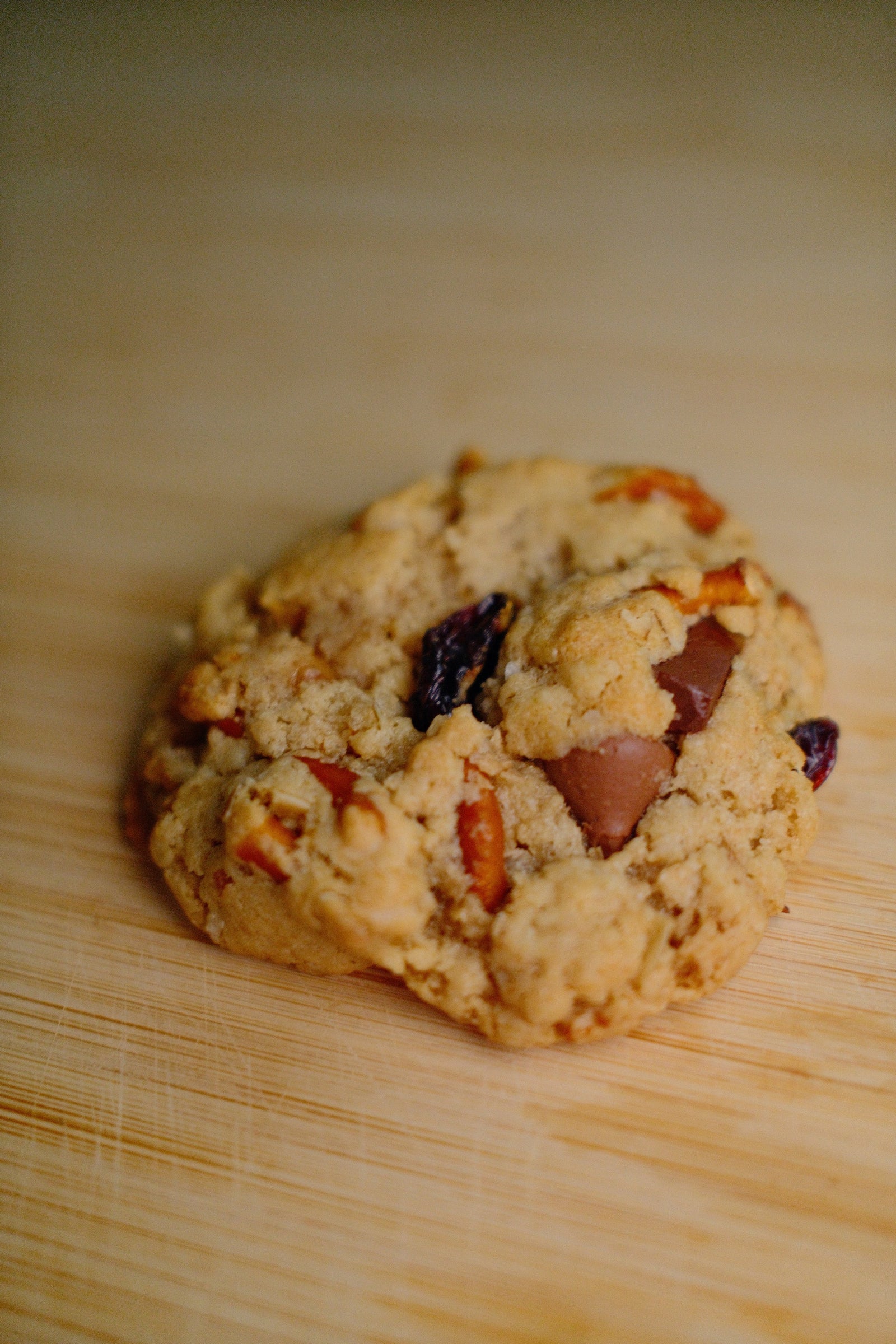
Two chocolates, toffee, caramel, oats, dried cherries and pretzels, in one buttery dough. That is not a kitchen-sink cookie. Each one is there for a reason, and here is what every piece does to the bite.
October 2, 2026
How to Brown Butter for Cookies
Brown butter is the single biggest flavor upgrade a cookie can get, and it takes eight minutes and a light-colored pan. Here is how to do it, what goes wrong, and how to use it in a recipe without wrecking the texture.